
Psychologiepraktijk Machteld Stakelbeek
Psycholoog, coach, spreker en auteur. Specialist in relaties, leiderschap en levenskunst.
Krijg inzicht in jezelf en de ander. Doorbreek belemmerende patronen.
Versterk jezelf, versterk je relaties

Psychologiepraktijk Machteld Stakelbeek
Psycholoog, coach, spreker en auteur. Specialist in relaties, leiderschap en levenskunst.
Krijg inzicht in jezelf en de ander. Doorbreek belemmerende patronen.
Versterk jezelf, versterk je relaties
Nieuws:
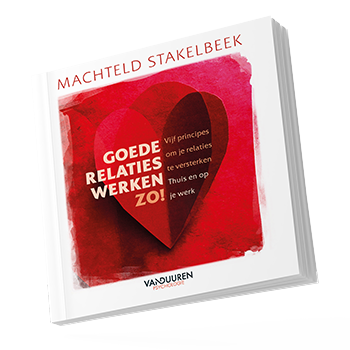
* Nieuw verschenen: Goede relaties werken zo! Vijf principes op je relaties te versterken. Bestel hier jouw exemplaar of bij je favoriet boekhandel.
* Lees hier het interview van Fokke Obbema met mij in de serie Sterveling in de Volkskrant van 3-3-2023
* Beluister hier het interview met Ruud de Boer in De Verdieping op Radio Rijnmond op 15-4-2023
* Het spel der godinnen – coaching kaarten voor vrouwen heeft een nieuwe look gekregen! Bestel hier jouw exemplaar.
Coaching




Workshops, trainingen en presentaties
Ik ontdekte vijf basis principes voor goede relaties. Deze principes zijn universeel, je kunt ze toepassen op alle relaties: liefdesrelaties, familierelaties, vriendschapsrelaties en werkrelaties en ook op de relatie met jezelf.
Meer lezen?
Het Spel der Godinnen laat alle godinnen in jou spreken, zodat je zelf het roer in handen kunt nemen. Je kunt de godinnen dan beschouwen als een soort innerlijke vergadering, waarvan jij de voorzitter bent.
Meer weten?
Je wilt een grote sprong voorwaarts maken in jouw persoonlijk leiderschap én je bent bereid jezelf een grote boost te geven. Speciaal voor vrouwelijke professionals: in zeven stappen naar persoonlijk leiderschap met de jaartraining Magnificent7.
Goede relaties werken zo
Welke godin ben jij?
Zin in een sterk jaar?
Boek mij voor een presentatie
Ik verzorg met plezier een inspirerende en interactieve lezing of workshop in uw organisatie of netwerk.